
To ban or not to ban social networks for children?
The real story behind the banning of social networks for children - Will Lithuania follow Australia's lead.
Lina Žemaitytė Kirkman
2/6/20263 min read
Back in December 2025, Australia become the first nation to officially prohibit social media access for children under 16. Since then, countries like Denmark, France, Malaysia and Spain are implementing or planning similar bans, with the aim to protect minors under 15-16 from harmful content.
Lithuania is also having a debate “To ban or not to ban social networks for children?”
Imagine that there is an interactive cinema in your city, where your children and all their friends like to spend a lot of time - three/four hours a day. In one hall, funny, family-friendly films are shown, in another, educational activities are held, in the third, children watch their favorite music videos with their peers and discuss them - and so on. Fun, innocent things. But the cinema is not only for children, so there are halls where R18 films are shown, where people eat feces, live broadcasts about bullying, fights, self-harm, even murders, pornography, extremely violent or anti-social short films are held. There is almost no censorship. By the way, the theatre is arranged in such a way that it is much easier to find the way to the halls with shocking films than to the educational ones. And sometimes in the same hall, where innocent movies are shown, those that are suitable only for adults are also shown. And everyone is allowed into all halls - regardless of age. So young girls in the anonymous twilight of cinema are often harassed by older men. And boys are "recruited" by gambling houses. Oh, and there are also robots that pretend to be people, make friends with children, and behave not very ethically.
After a while, children start to get sick: they become overweight from sitting still and sitting in theatres, their sleep is disrupted, but their mental health suffers the most – most of them start to suffer from depression, anxiety, self-harm, become withdrawn, nihilistic, dissatisfied with themselves, life and the world, and teenage suicide rates are rising for the first time in 15 years. Some worried parents, having found out what is happening and seen the consequences, start to demand that the cinema not show content that is inappropriate for children, because it is patronising and hurting children. The cinema responds: “Blow our tails – we create content for everyone, and by the way, that non-childish content is more profitable for us”.
What is left for parents who want to protect their children? They cannot stand at the door all day and ensure that children do not enter there, so they start to demand that the theatre check the age at the entrance and simply not let young children into the halls with content that is inappropriate for children. The cinema continues to offer to blow its tail, so parents who have lost hope are turning to the government, asking for the law to help them - and to order the cinema by law to not let young children in, as long as there is content that is harmful to children.
True, not all parents support such a law. A ban will not change anything, they say. We need to educate children, talk to them about those disturbing films that they have seen. We need to teach children awareness and self-control. In addition, let's prepare children for real life, there is no point in raising them in a greenhouse, there are terrible things everywhere - such is life. And there is no need to demonise that cinema so much, let's not forget, after all, there is a lot of useful, high-quality and educational content shown there. Children will lag behind the modern world if they stop going there.
And would you let your children into such a cinema?
Because that is what the story of banning social networks for children is about.
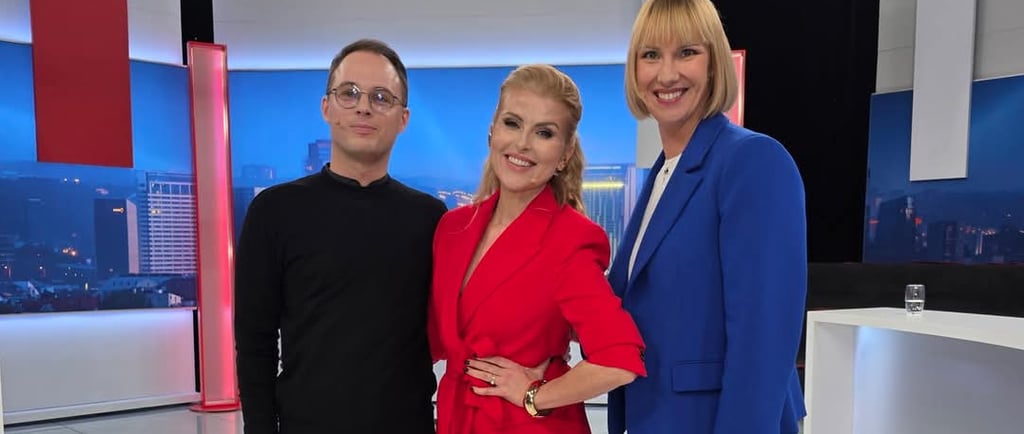
You can hear more arguments for and against in the program of the same name on LNK.
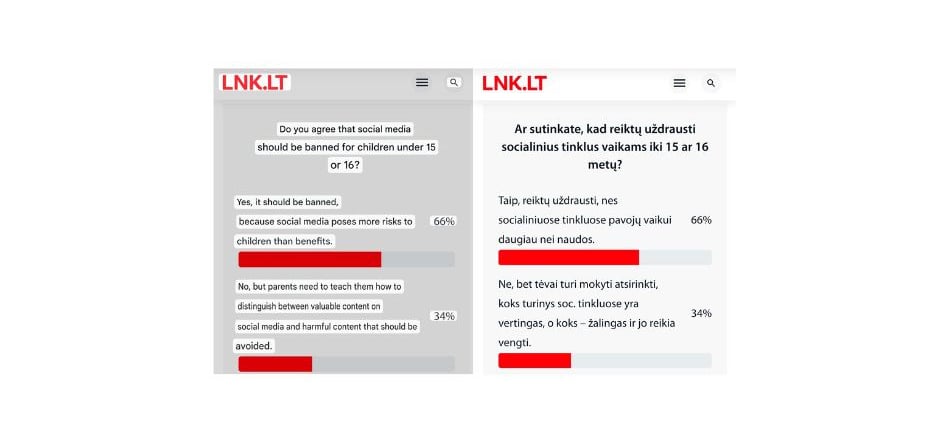
Progam vote results below:
Lina Žemaitytė Kirkman
Keep in touch
© 2025. All rights reserved. Privacy Policy